Showing posts with label YA Weekend. Show all posts
Showing posts with label YA Weekend. Show all posts
Thursday, January 31, 2013
SPEAKING FROM AMONG THE BONES by Alan Bradley


Saturday, July 07, 2012
It's not you...it's me?

Saturday, August 06, 2011
MISS PEREGRINE'S HOME FOR PECULIAR CHILDREN by Ransom Riggs
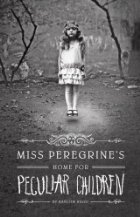 An original, delightful paranormal coming-of-age tale, MISS PEREGRINE'S HOME FOR PECULIAR CHILDREN introduces Jacob, a boy who grew up listening to his grandfather's tales of monsters, accompanied by fake-looking photographs of extraordinary children. As Jacob grows older, he loses interest in the obviously false tales (presumed to be allegory for his grandfather's flight from the Nazis as a child) until he witnesses his grandfather's gruesome death by a tentacled creature. His grandfather's last words send Jacob to a remote Welsh island to uncover the mysteries of his grandfather's strange past as a refugee cared for by "The Bird," Miss Peregrine. Finding the bombed-out remains of the "orphanage" where his grandfather spent his childhood is only the beginning of his journey.
Riggs tells Jacob's peculiar story with the help of vintage photographs, which adds a whimsical yet grounding element to the tale.
Source disclosure: I purchased this book.
Sunday, July 24, 2011
THE APOTHECARY by Maile Meloy
 The problem with a fantasy novel that does not, as mandated by genre, kill off the parents, is that the tedious issue of parents dealing with their young children's adventures (or the children's disbelief-suspending avoidance of discovery) must be addressed. While Meloy's resolution to this quandary is not the most satisfying, the magic she brings to a 1952 London in which alchemy is alive and well offsets that small annoyance. Janie and her family move from Los Angeles (where the McCarthy hearings are in full force) to London under a certain amount of duress. Janie meets Benjamin, the son of the apothecary, who confesses an infatuation with the mean girl at school and an ambition to become a spy. When Benjamin's father is kidnapped, Janie and Benjamin team up with Pip, a local pickpocket, and Sergei, a fellow student, to protect the book with which the apothecary has entrusted his son. Without giving up too many plot points, I will say that I wasn't entirely satisfied with the level of involvement of either Pip or Sergei. While they play key roles, they seemed a bit neglected and shoved out of the way during the main plot (which involves using alchemy to avert a nuclear disaster).
The setting of this novel was fantastic. In post-war London, shortages are still in effect, nuclear power is a major issue, and across the Atlantic, anti-Communist paranoia and unbelievable abridgments of First Amendment rights are affecting families. Alchemy is more science than magic, and the distillation of herbs into wonderful potions is great fun. The ending left me uncertain as to whether this book begins a series or not. If it does, the ending is pointlessly expositional, but if it does not, there are unanswered questions that make it deeply unsatisfying. I found the combination of alchemy with the historical setting highly readable, so I hope the first is the case. Although it has its flaws, THE APOTHECARY was an enjoyable read.
Source disclosure: I received this book compliments of the publisher through LibraryThing's Early Reviewer program.
Sunday, June 19, 2011
YA Weekend
 GILDA JOYCE AND THE BONES OF THE HOLY by Jennifer Allison:
 I like Gilda Joyce, thirteen-year-old self-styled Psychic Investigator. She's plucky, both a throwback to Harriet the Spy and Nancy Drew and a thoroughly modern girl. Frankly, mysteries were more interesting before the Internet and cell phones, so Gilda's quirky preferences for a typewriter and outrageous costumes over constant texting and Googling are very welcome. And very well-explained, as she uses her father's old typewriter to share her thoughts and feelings with his spirit, and to type up her investigation reports. Her father's death was also her impetus for becoming a psychic investigator, as she years to talk with him again. In this, the fifth book, Gilda is headed to St. Augustine (the nation's oldest city!) for her mother's wedding. Yes, Mrs. Joyce has met a man on the internet and decided to marry him. Gilda is highly skeptical of Mr. Pook, as her letters home to her friend Wendy Choy demonstrate. Gilda knows there's something wrong with Mr. Pook...or is she just resistant to any man not her father? She must uncover the truth about Mr. Pook, help teen neighbor Darla embrace her talent for seeing ghosts, and plan her mother's ideal Southern Belle Wedding. In addition, she must do an extra assignment - a travelogue for Mrs. Rabido's class.
This is a fun entry in the series. The setting of St. Augustine is unique, and Gilda's hilarious reports to Mrs. Rabido provide historical background for the area. Gilda's over-the-top costumes take on a new dimension in the South, and her frustration with Darla's reluctance to see ghosts rings true. The mystery provides some genuine chills, and Gilda, as always, is up to the task of solving it.
Start with the first book, GILDA JOYCE, PSYCHIC INVESTIGATOR.
Source disclosure: I purchased this book.
Sunday, June 05, 2011
YA Weekend - WSJ article
The Wall Street Journal is taking shots at YA as a genre, dismissing it as too dark and violent. On Twitter, the response has been the #YAsaves hashtag, in which members post their stories of YA literature's positive influence in their lives. YA author Laurie Halse Anderson wrote an excellent rebuttal, but there are irate, yet well-written, responses all over the Internet.
Edited to add Jackie Morse Kessler's excellent response.
I grew up before the YA explosion. Once I'd read all the kids' books in the library, I started in on Stephen King and Dean Koontz, as well as assorted classics. That was in sixth grade. Not to knock adult horror, but it would have been nice to have had books reflecting my experiences, fears, and struggles. Because not talking about problems does not make them go away. I have a four-year-old daughter, and I'm not looking forward to the tough conversations we'll have to have, but I am glad there is literature available for her to gain perspective. No one wants to talk about rape, abuse, suicide, cutting, teen sex, etc. But they exist. Being a teenager is horrible and confusing and dark, and for many teens, complicated by very real trauma beyond the usual growing pains. Bringing these issues into the light, showing troubled teens they are not alone: how are these bad things?
I find it difficult to take seriously a journalist who separates her reading recommendations for teens into "Books For Young Women" and "Books For Young Men," but I especially find statements such as this utterly absurd: "Yet it is also possible—indeed, likely—that books focusing on pathologies help normalize them and, in the case of self-harm, may even spread their plausibility and likelihood to young people who might otherwise never have imagined such extreme measures." Really? Has this "journalist" talked to readers of YA? Or documented incidents of a teen reading, say, a book about cutting and deciding to give it a try? I'm trying to get through this commentary without using the word "idiot," but it's becoming a challenge.
What are your thoughts? I do believe that parents should read what their children read for perspective into the teen experience as well as to find points of discussion that need to happen. I do not believe in censorship. Teens, like all other readers will read books they find of interest and find relevant to their lives. Would we prefer they not read? Or see reading as an activity devoid of personal meaning? Or not know that others have experienced the trauma they have? I find it absolutely hilarious that the "journalist" lists FAHRENHEIT 451 for young people. Or, at least for young men. I'm not sure what about it is unsuitable for the delicate minds of the young women.
Edited to add Jackie Morse Kessler's excellent response.
I grew up before the YA explosion. Once I'd read all the kids' books in the library, I started in on Stephen King and Dean Koontz, as well as assorted classics. That was in sixth grade. Not to knock adult horror, but it would have been nice to have had books reflecting my experiences, fears, and struggles. Because not talking about problems does not make them go away. I have a four-year-old daughter, and I'm not looking forward to the tough conversations we'll have to have, but I am glad there is literature available for her to gain perspective. No one wants to talk about rape, abuse, suicide, cutting, teen sex, etc. But they exist. Being a teenager is horrible and confusing and dark, and for many teens, complicated by very real trauma beyond the usual growing pains. Bringing these issues into the light, showing troubled teens they are not alone: how are these bad things?
I find it difficult to take seriously a journalist who separates her reading recommendations for teens into "Books For Young Women" and "Books For Young Men," but I especially find statements such as this utterly absurd: "Yet it is also possible—indeed, likely—that books focusing on pathologies help normalize them and, in the case of self-harm, may even spread their plausibility and likelihood to young people who might otherwise never have imagined such extreme measures." Really? Has this "journalist" talked to readers of YA? Or documented incidents of a teen reading, say, a book about cutting and deciding to give it a try? I'm trying to get through this commentary without using the word "idiot," but it's becoming a challenge.
What are your thoughts? I do believe that parents should read what their children read for perspective into the teen experience as well as to find points of discussion that need to happen. I do not believe in censorship. Teens, like all other readers will read books they find of interest and find relevant to their lives. Would we prefer they not read? Or see reading as an activity devoid of personal meaning? Or not know that others have experienced the trauma they have? I find it absolutely hilarious that the "journalist" lists FAHRENHEIT 451 for young people. Or, at least for young men. I'm not sure what about it is unsuitable for the delicate minds of the young women.
Saturday, January 08, 2011
YA Weekend - grab bag of series
Some 2010 housekeeping...didn't get these reviews up before year's end :)
 The Sisters Grimm - The Inside Story by Michael Buckley: The penultimate book in the series, The Inside Story picks up after the girls have jumped into a book in search of their baby brother. In the acknowledgments, Buckley calls this the most difficult in the series to write, and it shows. Puck adds desperately needed comic relief from the action-packed plot, which hurtles from book to book without advancing the series in a significant way. Still, there are fun moments, as when the characters of Oz panic because Sabrina refuses to play along with the way the story is meant to go. Overall, Sabrina was less likable (and that's saying something!) in this entry in the series. Its main purpose is to set up for the finale, and I believe it does that well. A serviceable entry in a magical series.
 Theodosia and the Staff of Osiris by R. L. LaFevers: I enjoyed Theodosia and the Serpent of Chaos, but found it hard to get into at first. This follow-up was even better. LaFevers seems more surefooted, Theodosia more evenly portrayed, and supporting cast fleshed out nicely. When a veritable army of stolen mummies is discovered at her father's museum, he is suspected of theft, and Theodosia must uncover the mystery of the traveling mummies, contend with a fierce cursed statue in the basement, and once again battle the Serpents of Chaos. This was great fun, very British and with an informative focus on ancient Egypt.
 The Diamond of Drury Lane (A Cat Royal Adventure) by Julia Golding: "Cat" Royal was a foundling left at the Theatre Royal, and she haunts the backstage of the theater, whose staff and actors make up her unconventional family. An orphan in 1790 had a dismal life, and Cat isn't exactly pampered. She's more or less self-sufficient, sheltered by the theater and looked after by Mr. Sheridan, its owner. She holds her own (mostly) in the streets of London. When she finds out about a diamond hidden in the theater, Cat must try to protect it. At the same time, she makes friends with Pedro, an African boy and violin prodigy, and crosses swords with one of the nasty street gangs that rule London. Cat is plucky, the story is exciting and intriguing, and if 1790 London doesn't quite seem authentic, well, that's fine. There's plenty of adventure to distract from any oddities.
 The 39 Clues: Into the Gauntlet by Margaret Peterson Haddix: A satisfying end to an uneven, but innovative series! The conclusion was not (at least to me) predictable, which after nine books seemed quite an accomplishment. I don't want to ruin the ending for those who haven't finished the series, so I'll just say that the conclusion was surprisingly complex and kept my attention nicely.
 The Sisters Grimm - The Inside Story by Michael Buckley: The penultimate book in the series, The Inside Story picks up after the girls have jumped into a book in search of their baby brother. In the acknowledgments, Buckley calls this the most difficult in the series to write, and it shows. Puck adds desperately needed comic relief from the action-packed plot, which hurtles from book to book without advancing the series in a significant way. Still, there are fun moments, as when the characters of Oz panic because Sabrina refuses to play along with the way the story is meant to go. Overall, Sabrina was less likable (and that's saying something!) in this entry in the series. Its main purpose is to set up for the finale, and I believe it does that well. A serviceable entry in a magical series.
 Theodosia and the Staff of Osiris by R. L. LaFevers: I enjoyed Theodosia and the Serpent of Chaos, but found it hard to get into at first. This follow-up was even better. LaFevers seems more surefooted, Theodosia more evenly portrayed, and supporting cast fleshed out nicely. When a veritable army of stolen mummies is discovered at her father's museum, he is suspected of theft, and Theodosia must uncover the mystery of the traveling mummies, contend with a fierce cursed statue in the basement, and once again battle the Serpents of Chaos. This was great fun, very British and with an informative focus on ancient Egypt.
 The Diamond of Drury Lane (A Cat Royal Adventure) by Julia Golding: "Cat" Royal was a foundling left at the Theatre Royal, and she haunts the backstage of the theater, whose staff and actors make up her unconventional family. An orphan in 1790 had a dismal life, and Cat isn't exactly pampered. She's more or less self-sufficient, sheltered by the theater and looked after by Mr. Sheridan, its owner. She holds her own (mostly) in the streets of London. When she finds out about a diamond hidden in the theater, Cat must try to protect it. At the same time, she makes friends with Pedro, an African boy and violin prodigy, and crosses swords with one of the nasty street gangs that rule London. Cat is plucky, the story is exciting and intriguing, and if 1790 London doesn't quite seem authentic, well, that's fine. There's plenty of adventure to distract from any oddities.
 The 39 Clues: Into the Gauntlet by Margaret Peterson Haddix: A satisfying end to an uneven, but innovative series! The conclusion was not (at least to me) predictable, which after nine books seemed quite an accomplishment. I don't want to ruin the ending for those who haven't finished the series, so I'll just say that the conclusion was surprisingly complex and kept my attention nicely.
Sunday, July 11, 2010
YA Weekend - series grab bag edition (again!)
 I was happy to see a fourth book in Linda DeMeulemeester's Grim Hill series. Cat is a lovely, strong heroine for the tweener crowd. In this entry, she goes on an exchange trip to Sweden where odd happenings are afoot. Even before she leaves, Cat is haunted by a recurring dream of drowning in cold water, which she ignores, busy as she is with fundraising for the trip. She's horrified when her mother tells her that to save money, Cat will stay with her aunt instead of with her school group, but even worse, her sister, Sookie, will tag along. Her aunt acts very strangely, the Swedish headmistress is odd, a strange fog hovers over the town, and Sookie seems to be conversing with a black cat in the barn. Cat and her friends get to the bottom of the strange occurrences, and Cat's aunt is revealed in a very surprising light. The setting means that there's no soccer in this entry (one of the things I love about this series is that Cat is an excellent athlete), but Cat refers to it, at least, and she seems to be growing in maturity in terms of handling problems and accepting her responsibility for her sister. A fun entry in a unique series.
My reviews of the first three books in the series.
 Enola Holmes is a delightful heroine. The much-younger sister of Sherlock and Mycroft, she runs away from home after her mother disappears, wanting to avoid the finishing school and crippling corseting her brothers seem to think necessary. She sets herself up as a "perditorian," a finder of lost things, and succeeds quite well. Her path intersects often with Sherlock's, and she must use her wits (and collection of disguises) to avoid capture. This is the final entry, and it's a treat. Enola and Sherlock have grown fond (from a distance) of each other as the books have evolved, even working briefly together. In Gypsy Goodbye, they work together more closely than ever before on the case of a duchess who disappeared at an Underground station. Simultaneously, they work to decode a cryptic message from Enola's mother. Will we finally find out her fate? The Victorian setting is brilliantly evoked, Enola is a delight, and the social messages are deftly inserted. A delightful conclusion to one of the best mystery series for young people.
My reviews of the first four books in the series
My review of book five
 Alison Dare, The Heart of the Maiden by J. Torres and J. Bone:
 Alison Dare, daughter of a world-renowned archaeologist and a superhero, has exciting adventures in these graphic novelettes, and she drags along her best friends from her boarding school to help her. The girls unleash plagues, stumble onto a band of Ninja nuns, and run afoul of a mummy's curse. These are cute, funny vignettes, chock-full of adventure. This would be an excellent series for the reluctant reader.
My review of Alison Dare, Little Miss Adventures
FTC Source Disclosure: I purchased all of these books.
Saturday, June 26, 2010
YA Weekend - series grab bag edition
I am in Paris, not thinking about book reviews even a little bit. I love the scheduled posts feature, which lets me review books for future posts! It also allows me to catch up on the book blog without posting eleven posts in one day...
The 39 Clues: I have not been great about reviewing this series, and it took me a bit of pondering to figure out why. I think I haven't been taking it seriously because each book takes me less than an hour to read, and it has a definite whiff of the potboiler about it. There's also the feeling of being manipulated by a marketing department - the books are released every couple of months and tell a tiny part of the story, stretching it out into ten books AND the books are complemented by a slick website, collector's cards, and a sweepstakes. I was skeptical for the first few books, but really, this series is growing on me. I think it may be the ideal way to coax reluctant readers into picking up a book or ten. And face it, the books are fun! Not high literature by any means, but enjoyable and entertaining and even...educational. But not in an overt way. Each book takes Amy and Dan (and Nellie, their au pair) to a different part of the world, where they delve into local history and biography to solve the next Clue. The improbable villains and unlikely adventures distract the reluctant reader from the fact that he's learning something along the way. I can see a child getting sucked into the story and looking to read more about one of the historical figures he found most intriguing. The books are easier to read than, say, Harry Potter and its descendants, but high-interest to be sure. The interactive component with the cards promotes involvement for children who are more into games than reading. Each book ends with a cliffhanger that would make it difficult to avoid picking up the next book. There is definitely a place for this series, and I think it serves its purpose well.
That said, my "reviews" are going to be more reports of which location the books focus on. Too much information about the plot would ruin the suspense. The overarching plot: Amy and Dan Cahill, orphaned at a young age, find out at the reading of their grandmother's will that they are part of the powerful Cahill clan, a collection of four family branches, each with its own strengths, including most of the famous/influential figures in history. Grace Cahill's will offers each member of her family a choice: one million dollars, or a chance to join the race to uncover the 39 clues of the Cahill family - clues that will make the winner all-powerful. Amy and Dan choose the clue hunt and travel the world with their au pair, Nellie, and Grace's cat, Saladin, searching for clues and uncovering more about their own past.
 Book 7: The Viper's Nest by Peter Lerangis: In this book, Amy and Dan travel to South Africa, where they learn about apartheid and finally discover which branch of the Cahill family they belong to. Amy and Dan also become suspicious of Nellie's motives in helping them. South African history was integrated quite nicely into the story, and the family factions continue to be unclear. Whom to trust is a constant theme in this series, with Amy and Dan forging alliances when they must, but agonizing over those decisions. The different families continue to evolve, growing in complexity from the caricatures they were in the early books to fairly interesting characters.
 Book 8: The Emperor's Code by Gordon Korman: The hunt moves to China, where the children travel to the Forbidden City and boy-band sensation Jonas Wizard befriends Dan. Or does he? I enjoyed this one, but I find myself not having much to say about it. The children are separated for a while, and I missed the banter between Amy and Dan, but it was enjoyable nonetheless. Chinese history is fascinating, and well-integrated into the plot.
 Book 9: Storm Warning by Linda Sue Park: The penultimate book in the series is a blast...and made me pre-order Book 10 immediately. Pirates. Really, that's all I need to say. Pirates are fun, and this book is a wild ride. There's a moment when Nellie muses that the clues in this adventure all have to do with "women kicking butt," and I realized that I enjoyed that element as well. This book is more revelatory with regard to the family and the Clue hunt; we learn more about Nellie, about the Man in Black, and about Amy and Dan's family branch. Linda Sue Park really did a fantastic job on this one. The history of Jamaica and of pirates like Calico Jack and Mary Bonny is fascinating. There's a very serious plot twist that I think is handled extremely well. I sometimes think of this series as superficial, but Park really delves into one consequence of the Clue hunt, giving it the weight it deserves. An excellent entry, and a fantastic set-up for the conclusion (Into the Gauntlet, August 31).
 Fablehaven: Keys to the Demon Prison by Brandon Mull: I've really enjoyed this series, but the last book was a bit of a slog. I could easily put this book down for long stretches, and I almost dreaded picking it back up again. Things are getting very dark and serious, and I missed the lighthearted fun elements that were more prevalent in the early books. On top of that, Kendra and Seth are separated for most of the book, and their sibling interaction is one of my favorite parts of the series. Plot twists like "a shocking betrayal!" were becoming stale for me. A reader can only take so many shocking betrayals before he can't be shocked anymore. This one is the most plot-driven of the series. As the characters race from danger to danger, there's little time for character development or reflection. It was rather exhausting, and while Book 5 tied up all the loose ends, making it a must-read for fans of the series, it had a perfunctory feel, as if Mull were checking off dangling threads from a list. I read this for closure, and so will anyone who read the first four books, but I was disappointed in the execution. The joy I found in the rest of the series was missing.
The rest of my Fablehaven reviews here.
Source disclosure: I purchased all these books.
The 39 Clues: I have not been great about reviewing this series, and it took me a bit of pondering to figure out why. I think I haven't been taking it seriously because each book takes me less than an hour to read, and it has a definite whiff of the potboiler about it. There's also the feeling of being manipulated by a marketing department - the books are released every couple of months and tell a tiny part of the story, stretching it out into ten books AND the books are complemented by a slick website, collector's cards, and a sweepstakes. I was skeptical for the first few books, but really, this series is growing on me. I think it may be the ideal way to coax reluctant readers into picking up a book or ten. And face it, the books are fun! Not high literature by any means, but enjoyable and entertaining and even...educational. But not in an overt way. Each book takes Amy and Dan (and Nellie, their au pair) to a different part of the world, where they delve into local history and biography to solve the next Clue. The improbable villains and unlikely adventures distract the reluctant reader from the fact that he's learning something along the way. I can see a child getting sucked into the story and looking to read more about one of the historical figures he found most intriguing. The books are easier to read than, say, Harry Potter and its descendants, but high-interest to be sure. The interactive component with the cards promotes involvement for children who are more into games than reading. Each book ends with a cliffhanger that would make it difficult to avoid picking up the next book. There is definitely a place for this series, and I think it serves its purpose well.
That said, my "reviews" are going to be more reports of which location the books focus on. Too much information about the plot would ruin the suspense. The overarching plot: Amy and Dan Cahill, orphaned at a young age, find out at the reading of their grandmother's will that they are part of the powerful Cahill clan, a collection of four family branches, each with its own strengths, including most of the famous/influential figures in history. Grace Cahill's will offers each member of her family a choice: one million dollars, or a chance to join the race to uncover the 39 clues of the Cahill family - clues that will make the winner all-powerful. Amy and Dan choose the clue hunt and travel the world with their au pair, Nellie, and Grace's cat, Saladin, searching for clues and uncovering more about their own past.
 Book 7: The Viper's Nest by Peter Lerangis: In this book, Amy and Dan travel to South Africa, where they learn about apartheid and finally discover which branch of the Cahill family they belong to. Amy and Dan also become suspicious of Nellie's motives in helping them. South African history was integrated quite nicely into the story, and the family factions continue to be unclear. Whom to trust is a constant theme in this series, with Amy and Dan forging alliances when they must, but agonizing over those decisions. The different families continue to evolve, growing in complexity from the caricatures they were in the early books to fairly interesting characters.
 Book 8: The Emperor's Code by Gordon Korman: The hunt moves to China, where the children travel to the Forbidden City and boy-band sensation Jonas Wizard befriends Dan. Or does he? I enjoyed this one, but I find myself not having much to say about it. The children are separated for a while, and I missed the banter between Amy and Dan, but it was enjoyable nonetheless. Chinese history is fascinating, and well-integrated into the plot.
  Book 9: Storm Warning by Linda Sue Park: The penultimate book in the series is a blast...and made me pre-order Book 10 immediately. Pirates. Really, that's all I need to say. Pirates are fun, and this book is a wild ride. There's a moment when Nellie muses that the clues in this adventure all have to do with "women kicking butt," and I realized that I enjoyed that element as well. This book is more revelatory with regard to the family and the Clue hunt; we learn more about Nellie, about the Man in Black, and about Amy and Dan's family branch. Linda Sue Park really did a fantastic job on this one. The history of Jamaica and of pirates like Calico Jack and Mary Bonny is fascinating. There's a very serious plot twist that I think is handled extremely well. I sometimes think of this series as superficial, but Park really delves into one consequence of the Clue hunt, giving it the weight it deserves. An excellent entry, and a fantastic set-up for the conclusion (Into the Gauntlet, August 31).
 Fablehaven: Keys to the Demon Prison by Brandon Mull: I've really enjoyed this series, but the last book was a bit of a slog. I could easily put this book down for long stretches, and I almost dreaded picking it back up again. Things are getting very dark and serious, and I missed the lighthearted fun elements that were more prevalent in the early books. On top of that, Kendra and Seth are separated for most of the book, and their sibling interaction is one of my favorite parts of the series. Plot twists like "a shocking betrayal!" were becoming stale for me. A reader can only take so many shocking betrayals before he can't be shocked anymore. This one is the most plot-driven of the series. As the characters race from danger to danger, there's little time for character development or reflection. It was rather exhausting, and while Book 5 tied up all the loose ends, making it a must-read for fans of the series, it had a perfunctory feel, as if Mull were checking off dangling threads from a list. I read this for closure, and so will anyone who read the first four books, but I was disappointed in the execution. The joy I found in the rest of the series was missing.
The rest of my Fablehaven reviews here.
Source disclosure: I purchased all these books.
Saturday, May 01, 2010
YA Weekend: The Wake Trilogy Series
 I don't think you can be a part of the book blogging community and NOT have heard of Lisa McMann's Wake Trilogy. After reading countless reviews of these books, I decided to purchase them last year. And I waited to read them until the last book came out because everyone kept saying that when they finished one book, they wanted to move on to the next one right away.
Because there are so many reviews/synopses of these books out there, I'll just summarize by saying that Janie realizes she's different at a very young age. She can jump into people's dreams. She doesn't seem to have a choice. If someone is sleeping around her, she's pulled into their dream.
 As she gets older, she starts to figure out how to avoid some dreams, but still finds herself in some interesting situations. When she gets pulled into a dream, she blacks out and usually ends up convulsing. This happens to her while driving and luckily, she only ends up in a ditch. She finds herself attracted to a fellow misfit classmate named Cabel. She soon learns he may not be who she thought he was. She also learns more about her dreaming and her destiny as a Dreamcatcher. She begins to learn how to control which dreams she enters and ends up using her ability to help people including the police.
Fade picks up not long after Wake ends with Cabel and Janie working together to help track down a teacher who may be a sexual predator in their school. Janie also learns even more about her ability and potentially what it holds with regard to her future.
 The final book, Gone is a bit different from the first two in that it doesn't involve Janie working on a police case. In fact, she spends the book trying to decide if she should cut herself off from the world and just live a solitary life. Discovering who her father is helps her decide whether living alone or using her dreamcatching ability is her destiny.
Overall, I found this series intriguing and fresh. I was pulled in and couldn't wait to read each book to see how the story arc moved along. I don't know that I can think of any books with a similar concept. I feel like the characters were represented very realistically. My only concern is that these books are quite heavy. Alcoholism, sexual assault, profanity, sex, drugs, etc. abound. I would definitely rate these books as rated R and would hold off on recommending them to anyone younger than fifteen or sixteen or so.
Monday, March 22, 2010
YA Weekend: the ghostgirl series
 I'm not sure what drew me to Tonya Hurley's ghostgirl series. I think I read some reviews on various book blogs and thought the concept sounded interesting.
In the first book ghostgirl, Charlotte finds herself starting her junior year of high school. She has vowed to do anything she can this year to become part of the popular crowd. She spent all summer planning her return to school and how she was going to reinvent herself. And on the very first day of school, she is lucky enough to get paired up with her dream guy in Physics class. Then she just so happens to choke to death....on a gummy bear. From there she is whisked away to the Afterlife or actually somewhere in between. She (as a ghost) now must attend Dead Ed in the same high school she attended while living. She learns she can pop in on her living classmates and see what they are up to. While doing so, she realizes that Scarlet, the sister of Queen Bee Petula, can see her. The two embark on a strange friendship. Throughout the course of the book, Charlotte refuses to accept her death and still tries to get the guy and be popular by living vicariously through her "living" classmates. By continuing to deal with the living, she alienates herself from her fellow dead students.
 The second book Homecoming finds Charlotte now moved on to the other side, though she's not quite sure if this is heaven or some place in between. She and the other Dead Ed students are working in a phone bank answering calls from teenagers who can use their help. Day in and day out Charlotte's phone never rings, frustrating her to no end. Back at her old high school, Queen Bee Petula has contracted a deadly staph infection from a botched pedicure. It seems the only way to help her out of her coma is for her sister Scarlet to go to the other side to find Charlotte to help her.
These books are very light fare and perfect for the 13-15 year old set. For me, Charlotte gets a bit annoying with her whiny attitude toward the injustice of her death. It also bugs me how much she wants to be one of the popular girls. I love the character of Scarlet. I was glad that the football jock dreamboat seemed to have more depth to him than what you would expect. These are somewhat fun, but a bit mediocre overall. They are very quick reads. The books themselves are gorgeous with a die-cut cover, color and decorative embellishments on every page and silver trimmed pages. HOWEVER, the extra height of the book (and perhaps the silver trim) make the book very heavy and awkward to hold for long periods of time.
These are very good for escapist reading. A third installment ghostgirl: Lovesick is due out this July.
Source disclosure: I borrowed these books from the library.
Saturday, October 17, 2009
YA Weekend: R.I.P. Challenge Books
October is a fun month to read creepy books. Halloween and Autumn just put me in the mood for mysteries and thrillers.
 I've had my eye on Bad Girls Don't Die by Kate Alender since I first noticed it in the blogging world last spring. From the reviews I read, it sounded so deliciously creepy.
High school student Alexis goes along with her life in typical teenage fashion, trying to fit in with the "Doom Squad" and but not quite feeling like they are really her crowd. She's not entirely sure where she fits in. She also has a fairly dysfunctional family with a workaholic mother, a dad who doesn't really seem to be involved much, and a younger sister Kasey who borders on quite weird. Kasey seems overly obsessed with her doll collection, even at age thirteen. Kasey has been ostracized by her friends and Alexis starts to see things are getting a little out of control. But Alexis can't quite figure out what Kasey's deal is. Bad Girls Don't Die evokes a few memories of The Exorcist. ;-) Actually, I'd be curious to know if the author got a bit stuck in the middle of the book. I felt the first half had one feel or tone to the story and then all of sudden with help from an unlikely friend Alexis figures out what's going on and the second half of the book has a much different feel to it. I actually liked the first half of the book better. The sort of mystery of it all. And the second half felt like I was reading a movie script...predictable and contrived. But overall, I enjoyed this quick YA read and would recommend it to anyone looking for something creepy to read. I would have LOVED this book as a teenager. Sidenote: I ended up reading the second half of this one night, in the middle of the night when I couldn't sleep. THAT made it even more CREEPY! Shockingly I was able to go back to sleep when I was through and didn't have freaky dreams.
 Though I have the novel Coraline on my bookshelf and was hoping to knock it off my TBR list and get one of my bookshelf books read. It's been sitting there for over a year now. I actually decided to read the graphic novel version instead. I've been in the mood for a graphic novel lately and this just seemed to fit the bill. About half way through, I was thinking to myself that I probably wouldn't read the novel after reading the graphic novel, because I felt like I would simply visualize the comic people in my mind instead of whatever I would have conjured up myself from Gaiman's descriptive writing. However, by the end of the graphic novel, I do believe I would like to read the novel as well. This story was just as creepy as Bad Girls Don't Die. I'm actually surprised that a graphic novel creeped me out just as much as novel. I think it was the Other Mother. Man, she was just awful! I highly recommend either version of this story for a fun Halloween read and I'm sure the movie that came out last year is just as good.
 Closed for the Season by Mary Downing Hahn is a middle-grade mystery that I have seen reviewed several places around the book blog world. The reviews only mildly peaked my interest. It wasn't until passing it on the library bookshelf that I decided I wanted to give it a try. And even though I've already read my four books for the R.I.P. IV Challenge, I figure why stop just because I hit FOUR. I also have a copy of Hahn's The Doll in the Garden sitting on my bookshelf. If that is as good as this one, I think I might have to delve into that one soon.
In Closed For the Season, Logan and his family move into an old rundown house in a new town and quickly learn that it is referred to as "the murder house". The previous owner, Mrs. Donaldson was murdered because she discovered someone embezzling money from The Magic Forest, the local amusement park. Logan meets a brainy and precocious boy next door named Arthur. The two pal around and decide to try and solve Mrs. Donaldson's murder running into the rough and tumble of the town as well as the hoyt-y toyt-y (hmm....spelling on that one?). The boys soon learn they don't know who they can trust, but they persevere and try to solve the mystery.
This book is a very fun middle-grade mystery. It actually reminded me a bit of a Nancy Drew book (or I suppose Hardy Boys--though I never read any of those. The Hardy Boys were mentioned in passing by one of the characters in this book.). Just an old-fashioned kids-stumble-upon-a-mystery-and-try-to-solve-it book. I really enjoyed this one and I think the middle-school version of me would have loved it!
These would be books #3, 4 and 5 that would work for the R.I.P. IV Reading Challenge! Yay! I completed a challenge! And this was a great one! I plan on doing it again next year, assuming Carl plans on hosting it again. :-)
Source disclosure: I borrowed all of these books from the library.
 I've had my eye on Bad Girls Don't Die by Kate Alender since I first noticed it in the blogging world last spring. From the reviews I read, it sounded so deliciously creepy.
High school student Alexis goes along with her life in typical teenage fashion, trying to fit in with the "Doom Squad" and but not quite feeling like they are really her crowd. She's not entirely sure where she fits in. She also has a fairly dysfunctional family with a workaholic mother, a dad who doesn't really seem to be involved much, and a younger sister Kasey who borders on quite weird. Kasey seems overly obsessed with her doll collection, even at age thirteen. Kasey has been ostracized by her friends and Alexis starts to see things are getting a little out of control. But Alexis can't quite figure out what Kasey's deal is. Bad Girls Don't Die evokes a few memories of The Exorcist. ;-) Actually, I'd be curious to know if the author got a bit stuck in the middle of the book. I felt the first half had one feel or tone to the story and then all of sudden with help from an unlikely friend Alexis figures out what's going on and the second half of the book has a much different feel to it. I actually liked the first half of the book better. The sort of mystery of it all. And the second half felt like I was reading a movie script...predictable and contrived. But overall, I enjoyed this quick YA read and would recommend it to anyone looking for something creepy to read. I would have LOVED this book as a teenager. Sidenote: I ended up reading the second half of this one night, in the middle of the night when I couldn't sleep. THAT made it even more CREEPY! Shockingly I was able to go back to sleep when I was through and didn't have freaky dreams.
 Though I have the novel Coraline on my bookshelf and was hoping to knock it off my TBR list and get one of my bookshelf books read. It's been sitting there for over a year now. I actually decided to read the graphic novel version instead. I've been in the mood for a graphic novel lately and this just seemed to fit the bill. About half way through, I was thinking to myself that I probably wouldn't read the novel after reading the graphic novel, because I felt like I would simply visualize the comic people in my mind instead of whatever I would have conjured up myself from Gaiman's descriptive writing. However, by the end of the graphic novel, I do believe I would like to read the novel as well. This story was just as creepy as Bad Girls Don't Die. I'm actually surprised that a graphic novel creeped me out just as much as novel. I think it was the Other Mother. Man, she was just awful! I highly recommend either version of this story for a fun Halloween read and I'm sure the movie that came out last year is just as good.
 Closed for the Season by Mary Downing Hahn is a middle-grade mystery that I have seen reviewed several places around the book blog world. The reviews only mildly peaked my interest. It wasn't until passing it on the library bookshelf that I decided I wanted to give it a try. And even though I've already read my four books for the R.I.P. IV Challenge, I figure why stop just because I hit FOUR. I also have a copy of Hahn's The Doll in the Garden sitting on my bookshelf. If that is as good as this one, I think I might have to delve into that one soon.
In Closed For the Season, Logan and his family move into an old rundown house in a new town and quickly learn that it is referred to as "the murder house". The previous owner, Mrs. Donaldson was murdered because she discovered someone embezzling money from The Magic Forest, the local amusement park. Logan meets a brainy and precocious boy next door named Arthur. The two pal around and decide to try and solve Mrs. Donaldson's murder running into the rough and tumble of the town as well as the hoyt-y toyt-y (hmm....spelling on that one?). The boys soon learn they don't know who they can trust, but they persevere and try to solve the mystery.
This book is a very fun middle-grade mystery. It actually reminded me a bit of a Nancy Drew book (or I suppose Hardy Boys--though I never read any of those. The Hardy Boys were mentioned in passing by one of the characters in this book.). Just an old-fashioned kids-stumble-upon-a-mystery-and-try-to-solve-it book. I really enjoyed this one and I think the middle-school version of me would have loved it!
These would be books #3, 4 and 5 that would work for the R.I.P. IV Reading Challenge! Yay! I completed a challenge! And this was a great one! I plan on doing it again next year, assuming Carl plans on hosting it again. :-)
Source disclosure: I borrowed all of these books from the library.
YA Weekend: Luv Ya Bunches
 I had a lot of fun reading Luv Ya Bunches by Lauren Myracle. I first saw this charming book listed on Shelf Awareness awhile back and the cover is what caught my eye. I loved that the four main characters were so multi-cultural; that this book could appeal to a very wide range of girls no matter what their background is.
Luv Ya Bunches is the story of four fifth-grade girls: Violet, Katie-Rose, Camilla and Yasaman. They are each dealing with their own friendship issues: Violet is the new girl in school and not sure where she will fit in; Katie-Rose comes off a little strange and a bit goofy, she's obsessed with video and film; Camilla is the third girl in a three-girl "mean girl" clique and not so sure she's really a "mean girl" or that she cares that much about popularity; and Yasaman, whose nickname is Spazaman around school, is shy, a wallflower (always good for eavesdropping), and great with computers. Yasaman creates a social networking website just for her and her friends. Now, she just needs to find some friends. And this is the year for it! Each of these girls are desperate in their own way for new friends and happen to find each other.
Even though this book is middle grade fiction geared specifically at 4-6th grade girls, I found the characters to have a ton of personality and depth. Each of the four main characters had their own personality traits that again would appeal to a large group of girls, either as someone they identify with or someone they would like to be. There's a great storyline about friendship and what is truly important. Also deals with the issue of "mean girls" and popularity. The story is told in alternating chapters with each of the four main characters having their own voice and story. Myracle has also incorporated the technology of today into the book through instant message conversations as well as film script style storytelling. These stylistic components are sure to appeal to girls in this age range.
A real winner and a perfect gift for the tween on your book shopping list! Also good for any reader who really enjoyed Emma-Jean Lazarus Fell Out of a Tree and Emma-Jean Lazarus Fell in Love. Though this was a little bit fluffier then the Emma-Jean books. I think Luv Ya Bunches will definitely appeal to Emma-Jean readers.
Other blogger opinions: I'm Booking It, Welcome to My Tweendom, My Reading Room
Here is a link to a fun author interview with Lauren Myracle.
And the book trailer:
Source disclosure: ARC sent to me by Laura Mihalick from Abrams Books through a Shelf Awareness galley request.
Sunday, August 02, 2009
YA Weekend--Hunger Games
 I do realize I'm about the last book blogger on the planet to review Hunger Games by Suzanne Collins. :-) I have had my eye on it since it first made its debut in the blogosphere a year ago. I entered every contest I could find and tried to get it from early reviewer sites. But I did not get my hands on a copy. So I finally broke down and bought my own. Here's the thing, I know it's dystopian fiction. And I'm not sure how I feel about that subject. Sometimes I think that turns me off. But there was something very compelling to me about the storyline and reviews I read about this book. I've read MANY MANY EXCELLENT reviews that are hard to ignore.
I tend to be also be a bit leery about books that have too much hype (ie: The Book Thief and Twilight) because I tend to have high expectations and they fall short for me. I decided to finally jump into the Hunger Games last weekend and boy, I wasn't the least bit sorry!!!
For those who have completely ignored the hype of this book, Katniss and her sister and mother live in District 12 of a country called Panem (it is explained that Panem used to be America and District 12 is located where coal country or Appalachia used to exist). Every year the Capitol pulls two names (one boy, one girl) from each district to participate in The Hunger Games. They release these 24 individuals into an arena filled with whatever environment the officials choose for that year and they must fight each other to the death until one is standing at the end, the victor. The catch is that the Games are televised reality show style all across Panem. And the officials can introduce anything they want into the Arena to move the Games along. Katniss ends up representing District 12 in the Games and since we know the series continues, the ending is fairly predictable.
But however predictable the ending is, getting there is quite interesting. One thing I really liked about Hunger Games is that the main character is a very empowered young woman. She has had to work hard her whole life to survive and even though she does not have much, she makes the most of it. She's very intelligent and cunning, as well as athletic and logical. And really Collins wrote many of the female characters to be smart, athletic, interesting characters (Foxface and Rue). Some of the male characters in contrast seemed of somewhat inferior intelligence and some of them were just big oafs!
I believe Collins could have ended the Hunger Games with the winner returning home wrapping this up into one nice novel. I'll be curious to see how the next two books play out in the aftermath of what happens at the Games. And I'm wondering if they'll be able to keep up the excitement or if the story will drag along. We'll see! Early reviews of Book 2, Catching Fire are all very good and promising.
Saturday, June 27, 2009
YA Weekend--The Postcard
 The Postcard by Tony Abbott is more of a middle-grade novel than Young Adult. I learned of this book after reading a terrific review on Lesa's Critiques blog. It won the Edgar Award for Best Juvenile Mystery.
Thirteen-year old Jason finds himself spending time with his father in sunny St. Petersburg, Florida cleaning out his grandmother's house after she passes away. All he wants to do is get back home (I think it's New York, or some place more north--I can't find it in the book now) to hang out with his best friend Hector. His stay in Florida takes a turn for the worse when his father falls off a ladder cleaning the gutters and ends up spending some time in the hospital. Jason finds himself alone and stumbles onto a family mystery after a strange anonymous phone call asking him if he's smart and to look in the desk. He starts investigating and finds an old postcard. The postcard is an old hotel in the area once owned by Jason's great-grandfather. He discovers a pin-hole in a window in the hotel on the postcard and feels compelled to check it out after also discovering an old magazine article featuring the hotel in a fictional story. This starts Jason's journey throughout St. Petersburg and his family history.
By the end of the story Jason learns who his real grandfather is, what his grandmother's life was like when she was younger, and what a tyrant his great-grandfather was. Along the way, Jason also befriends a girl in the neighborhood named Dia who eventually helps him solve the mystery.
I really love the premise of this book. I think family histories can be very interesting and I love looking at old archival materials like postcards and whatnot. A trail of clues on old postcards is a fun idea! I also liked the realistic nature of Jason's family. His parents are on the verge of splitting up, he feels torn between them. His father is a borderline alcoholic. There are real family issues discussed that I think many kids reading this book can identify with.
However, this book was quite long for what it was. I felt bored about halfway through. And though it overall was an interesting concept, I wonder if I was bored if a middle-schooler reading this might be bored too. I'm not sure. Funny, I think I'm realizing something about my reading habits. This particular book had a story within a story concept to it. I find that whenever I read books like that (ie: Atwood's Blind Assassin), I lose interest in the story within a story and just want to read the "real" story. I rate this book lower simply because of its length and sort of wished perhaps there was a tad bit more adventure/suspense to the story. It unfolded very methodically. Just wasn't zippy enough for me after reading The Red Blazer Girls and the 39 Clues books.
Sunday, June 21, 2009
YA Book Carnival - Giveaway

The very first YA Book Carnival begins today! At On My Bookshelf, we are excited to host a giveaway of two fantastic YA novels, courtesy of Penguin Young Readers!
 Waiting for You by Susane Colasanti: Marisa is ready to start her sophomore year on the right foot with a positive attitude and dreams of a boyfriend who will bring her everything she's been waiting for. But when popular Derek surprisingly asks her out, she discovers that what she always wished for might not be enough. Navigating a year filled with conflict--including her parents' relationship turmoil and a fight with her best friend--makes Marisa stronger and helps her understand what's really important. Someone close to Marisa has been waiting for her all along, but will she realize that he's the one?
 Peace Love & Baby Ducks by Lauren Myracle: By sophomore year, Carly is so over her cushy lifestyle in the affluent Atlanta suburbs. She is tired of fancy nails, shiny cars, and empty values, and has vowed to become a non-leg-shaving-rebel hippy just to be different. The only person she isn't sick of is her little sister, Anna. But while Carly was away for the summer, her younger sister blossomed into the hottest girl at school. Carly has always relied on Anna's consistency and authenticity, but suddenly everything is different. Then beautiful Cole appears on the scene, and Carly is too busy crushing on him to notice that Anna is drifting away. During an ill-fated party at their house, Carly and Anna--and a trio of adorable baby ducks--hit rock bottom and finally start to make things right.
Who wants to win this pair of ARCs? Leave a comment here for one entry. Become a public follower for FIVE more entries. The winner (US & Canada only, please) will be selected on Friday, June 26 at noon, in time to announce the winner for the last day of the YA Book Carnival on Saturday, June 27.
Saturday, May 30, 2009
YA Weekend
 Gilda Joyce: The Dead Drop by Jennifer Allison: This is the fourth in an entertaining mystery/paranormal series for the 9-12 crowd, featuring Gilda Joyce, who is practicing for her chosen career as a "psychic investigator." I've enjoyed this series, and the fourth is an excellent entry. Plan on significant suspension of disbelief, and not from the ghost trying to communicate with Gilda: Gilda's mother lets not-quite-fifteen Gilda go off and live in Washington, DC for a summer to intern at the International Spy Museum. Mmmhmmm. And Gilda is sharing an apartment with a twentysomething. Mmmmhmmm. But if you just accept that and settle into the gripping ghost story and more hilarious internship story, this is a fun, fun read, and the strongest plot in the series.
 Anyone following Gilda's adventures, with her penchant for wacky disguises and her handbooks on psychic investigation and spying, will understand why she's so excited about her Spy Museum internship. She ends up in charge of a group of children attending "Spy Camp," teaching them important spy skills like detecting lies, concocting a good cover story, and playing Wigball. A Russian spy appears to be haunting the museum (and Gilda's dreams), and Gilda is led by a dream of Abraham Lincoln to a "dead drop," a location where spies leave messages for their handlers. Cold War history, double-agent intrigue, and the mysterious Russians make this a blast to read, and the mystery is very well done. Gilda's work with the Spy Camp children is hilarious, and while I could have done without the brief scenes from the point of view of the "psychic spy," the surprise appearance of a new character near the end made them much more tolerable. I loved the surprise character! This could be read alone, but for maximum enjoyment, I'd read the first three books before picking this one up, just to watch Gilda's skills develop.
Gilda Joyce, Psychic Investigator
Gilda Joyce and the Ladies of the Lake and Gilda Joyce: The Ghost Sonata
 Oh. My. Gods by Tera Lynn Childs: This book was rather disappointing for me, as the premise (high school girl whisked off to live in Greece and attend a special school for descendants of Greek gods) sounded great. The execution didn't live up to the promise. There are many ways to set up this sort of book. You can have your character encounter the paranormal out in the normal world, making it impossible for him to deny the unbelievable (Percy Jackson), you can have a messenger give him the information, which is backed up by past strange experiences that are now explained (Harry Potter), etc. Childs chooses the weakest setup I can imagine. We barely meet Phoebe in her normal life before her mother appears with a fiance and announces that the family is moving to Greece to live with him. Phoebe will attend the only school on the remote island. On the ferry ride to the island, Phoebe's mother reveals the truth about the school: it was established to educated the children of gods. Phoebe's response is strange; she thinks this is crazy, but is inclined to believe her mother and new stepfather, who provide proof. If something strange had happened at Phoebe's old school, or if we had simply met Phoebe while she was already on the island, I would have been drawn into the story much more readily. As it was, I didn't feel particularly engaged until the Academy life is in full swing. There really isn't much Greek mythology in this one. I really thought the Percy Jackson series did a much better job of incorporating the Greek myths and making them fresh. In Oh. My. Gods, we just have a description of the various cliques, which are all along ancestor lines (so the Ares kids are the jocks, etc.). Phoebe, as a nothos (or normal, non-divine person), is an outcast, but is befriended by two students there who don't care about her humble origins. Phoebe is a runner, and she tries out for the track team at the Academy, and falls for a jerk (I can't tell you how much I hate this plotline in YA books), while struggling to keep her place on the track team.
There's really too much going on here, and if the set-up had been different, it would have been easier for me to enjoy the story. As it is, Phoebe is dealing with 1. leaving her California friends thousands of miles away and being unable to tell them about the island's secret, 2. a new stepfather who is also her headmaster, 3. a wicked step-sister with supernatural powers, 4. the sudden marriage of her mother, 5. isolation at her new school, where most students hate or ignore her, 6. keeping up her grades so she and her California friends can all go to USC together, and 7. awareness of supernatural forces. That's a lot to balance, and I didn't really find the ties to her California friends all that interesting (especially when described in IM transcripts). This was a cute summer read, but I had been hoping for more. I am mildly interested in reading the follow-up, Goddess Boot Camp, but I won't rush to buy it in hardcover.
Monday, May 25, 2009
YA Weekend--Memorial Day Edition
I think I could almost start a "World War II Wednesday" regular feature here. I cannot believe how many books there are based during WWII. I never had a particular fascination with WWII or cared to learn more about it other than what I was taught in school. But books on the subject keep popping up and sound good to me. A bit ago, I finished two juvenile fiction books set during WWII: Lily’s Crossing by Patricia Reilly Giff and The Boy in Striped Pajamas by John Boyne. Both were interesting and worthwhile reads.
Lily’s Crossing: Lily finds herself with her grandmother at their oceanside summer home in 1944. She always looks forward to her summers in Rockaway, but this year is different. Her father was shipped overseas to help with the war effort and her best friend moved away so her father could help build planes in Michigan. Just when her summer looked like it was going to be the worst ever, Lily meets a Hungarian boy named Albert. They forge a friendship throughout the summer. This sweet book depicts wartime in America with rationing, a town’s reaction to their own missing in action, and just simply the unknown during war. The pace is a little slow, but that seems to reflect the pace of Lily’s summer days and also the patience for waiting for a loved one to return home from war. This is a middle-grade Newbery Honor Book and I think it definitely fits the age group well. You learn about the war, but it is a bit censored and appropriate for a younger age. I wonder if this book might be a bit boring for the younger set, but I liked it.
The Boy in Striped Pajamas: We meet nine-year-old Bruno, and his family who all of sudden must pack up their house in Berlin because his father has gotten a new assignment. They all move to an undesirable house at Out-With. From Bruno’s bedroom window he can see a fence with many people behind it. They are all wearing the same outfit: striped suits with matching caps. Bruno does not understand why his family has left Berlin and everything they know, but he knows his father is an “important man who works for the “Fury” and is going places.” The book goes on through Bruno’s days at Out-With and he can only accept so many “Don’t go anywhere near the fence” statements before he goes exploring. He follows the fence for quite a while, not seeing a soul, until he comes upon a little boy named Schmuel. The two form an unlikely friendship never playing and only talking to each other with the fence between them. This book is written from Bruno’s very ignorant and naïve point of view. He does not understand at all what is going on on the other side of the fence and in fact, never does quite figure it out, even at the end (which is incredible, but not all together shocking—I saw the end coming as soon as Bruno crossed the fence line). He spouts some of the rhetoric he hears coming from his house from the Nazi soldiers. And all he knows is that his father is a great man. The author purposefully omits the word Auschwitz in the book, instead sticking with Bruno’s mispronunciation of Out-With so that the book could really be about any war atrocity.
I actually think Boy in Striped Pajamas would make a good book club book just because there is much to discuss. Just from reviews I have read on amazon.com and other sites, this book sparks many lively discussions, for example here on LibraryThing. I keep going back and forth on my rating for this book. I give it four stars just for the thought-provoking ideas, but maybe only 3.0 for the execution. In the LibraryThing discussion, there was some negative reaction to this book as historical fiction. They felt that a nine-year old growing up in a household with visits from Hitler would probably know more about what was going on than Bruno. Also, that maybe some of the depictions of Auschwitz were not accurate. However, the cover of this book states that it’s a fable. I actually give it a bit more leeway knowing that (and hoping that came from the author and not the publisher) because then its not based so much in fact, but in what the moral of the story is.
Bruno’s naivety bugged me quite a bit. I think he actually acted more like a five or six year old. And I felt the first half of the book was a bit dull. Schmuel does not even appear until more than half way though the book. The second half does pick up and I think you just need to take the story with a grain of salt. It is what it is. And yes, even though maybe history did not happen just as Boyne has stated it, he paints an interesting picture of what happened during the Holocaust and may help bring it to a more real level, especially for a young adult who may not have the same amount of knowledge as adults reading the book.
I think the right age for this book would be around 13-14 years old. Any younger than that probably would not understand. I know I didn’t truly learn about WWII and details of it all until freshman year of high school or maybe Eighth grade when we read Anne Frank. This book is definitely not appropriate for younger than that based on subject matter.
Hope everyone is enjoying their Memorial Day Weekend and please take a moment to remember the soldiers who have fought and are fighting for our country and those who gave their lives. We came back from vacation on Saturday and encountered many, many military men and women in the airport. And in particular one army soldier getting on our plane saying good-bye to his wife and two young sons. Everyone was hugging and crying and you could see just how hard it was for him to stop hugging them and get on the plane. It was quite poignant. And a nice reminder of what this weekend is really about (besides the relaxing and grilling).
Lily’s Crossing: Lily finds herself with her grandmother at their oceanside summer home in 1944. She always looks forward to her summers in Rockaway, but this year is different. Her father was shipped overseas to help with the war effort and her best friend moved away so her father could help build planes in Michigan. Just when her summer looked like it was going to be the worst ever, Lily meets a Hungarian boy named Albert. They forge a friendship throughout the summer. This sweet book depicts wartime in America with rationing, a town’s reaction to their own missing in action, and just simply the unknown during war. The pace is a little slow, but that seems to reflect the pace of Lily’s summer days and also the patience for waiting for a loved one to return home from war. This is a middle-grade Newbery Honor Book and I think it definitely fits the age group well. You learn about the war, but it is a bit censored and appropriate for a younger age. I wonder if this book might be a bit boring for the younger set, but I liked it.
The Boy in Striped Pajamas: We meet nine-year-old Bruno, and his family who all of sudden must pack up their house in Berlin because his father has gotten a new assignment. They all move to an undesirable house at Out-With. From Bruno’s bedroom window he can see a fence with many people behind it. They are all wearing the same outfit: striped suits with matching caps. Bruno does not understand why his family has left Berlin and everything they know, but he knows his father is an “important man who works for the “Fury” and is going places.” The book goes on through Bruno’s days at Out-With and he can only accept so many “Don’t go anywhere near the fence” statements before he goes exploring. He follows the fence for quite a while, not seeing a soul, until he comes upon a little boy named Schmuel. The two form an unlikely friendship never playing and only talking to each other with the fence between them. This book is written from Bruno’s very ignorant and naïve point of view. He does not understand at all what is going on on the other side of the fence and in fact, never does quite figure it out, even at the end (which is incredible, but not all together shocking—I saw the end coming as soon as Bruno crossed the fence line). He spouts some of the rhetoric he hears coming from his house from the Nazi soldiers. And all he knows is that his father is a great man. The author purposefully omits the word Auschwitz in the book, instead sticking with Bruno’s mispronunciation of Out-With so that the book could really be about any war atrocity.
I actually think Boy in Striped Pajamas would make a good book club book just because there is much to discuss. Just from reviews I have read on amazon.com and other sites, this book sparks many lively discussions, for example here on LibraryThing. I keep going back and forth on my rating for this book. I give it four stars just for the thought-provoking ideas, but maybe only 3.0 for the execution. In the LibraryThing discussion, there was some negative reaction to this book as historical fiction. They felt that a nine-year old growing up in a household with visits from Hitler would probably know more about what was going on than Bruno. Also, that maybe some of the depictions of Auschwitz were not accurate. However, the cover of this book states that it’s a fable. I actually give it a bit more leeway knowing that (and hoping that came from the author and not the publisher) because then its not based so much in fact, but in what the moral of the story is.
Bruno’s naivety bugged me quite a bit. I think he actually acted more like a five or six year old. And I felt the first half of the book was a bit dull. Schmuel does not even appear until more than half way though the book. The second half does pick up and I think you just need to take the story with a grain of salt. It is what it is. And yes, even though maybe history did not happen just as Boyne has stated it, he paints an interesting picture of what happened during the Holocaust and may help bring it to a more real level, especially for a young adult who may not have the same amount of knowledge as adults reading the book.
I think the right age for this book would be around 13-14 years old. Any younger than that probably would not understand. I know I didn’t truly learn about WWII and details of it all until freshman year of high school or maybe Eighth grade when we read Anne Frank. This book is definitely not appropriate for younger than that based on subject matter.
Hope everyone is enjoying their Memorial Day Weekend and please take a moment to remember the soldiers who have fought and are fighting for our country and those who gave their lives. We came back from vacation on Saturday and encountered many, many military men and women in the airport. And in particular one army soldier getting on our plane saying good-bye to his wife and two young sons. Everyone was hugging and crying and you could see just how hard it was for him to stop hugging them and get on the plane. It was quite poignant. And a nice reminder of what this weekend is really about (besides the relaxing and grilling).
Saturday, May 16, 2009
YA Weekend
The Graveyard Book by Neil Gaiman: It took me a while to read this book, even though I've had it for months. I picked it up some time ago and started reading and didn't make it past the creepy, disturbing intro. It's told from the point of view of "the man Jack," who has just stabbed to death three members of a family and is looking for the baby. I tried again, and I am so glad I did. There's a reason this book won the Newbery Award. Gaiman is basically telling the story of The Jungle Book using a graveyard as a setting, and his imagination makes it seem plausible that Bod (short for Nobody) Owens would be adopted by a ghost couple and raised in the graveyard, learning tricks of the dead, like Fading, that allow him to escape the notice of the living. Predictably, Bod leaves the safety of the graveyard and the protection of Silas, his not-exactly-dead guardian, and finds danger in the new world. Bod is sweet and sympathetic, even when he defies Silas and his adoptive parents and the slightly clueless ghosts. The Graveyard Book is an imaginative, beautiful coming-of-age tale with a paranormal setting that spurs an apt allegory for growing up.
Percy Jackson: The Last Olympian by Rick Riordan: Here it is, the last book in the Percy Jackson series. It was an excellent end to the series. The full prophecy is finally revealed, we learn the identity of the spy at Camp Half-Blood, and Percy's romantic dilemma is resolved. Even better, while the cycle of the first five books ends in a satisfying way, Riordan hints at future books set at Camp Half-Blood. If you've read the first four books, you'll almost certainly appreciate this final chapter, and if not, I don't want to spoil anything for you, so go pick up the first book, The Lightning Thief, which introduces Percy, a twelve-year-old boy who learns that his father is a Greek god. He joins the other demigods at Camp Half-Blood to learn to manage his powers. Naturally, strange happenings tend to follow demigods out of Camp Half-Blood and into New York, where Olympus now resides. The mix of Greek mythology and coming-of-age story is very well done, with abundant comic relief from all the action.
Theodosia and the Serpent of Chaos by R. L. LaFevers: I love reading about ancient Egypt, so this seemed a sure bet for me. However, it took me a bit of effort to get into this book about Theodosia Throckmorton, the eleven-year-old daughter of archaeologists who bring Egyptian artifacts home to their museum in Edwardian England. Since she was little, Theodosia has been able to see the curses on the artifacts, and, finding that the rest of her family doesn't notice them, takes it upon herself to learn how to lift the curses. When a particularly dark curse is brought back on an artifact called the Heart of Egypt, which then disappears, Theodosia joins forces with a little brother, a pickpocket, and a stranger who notices her special abilities. In the end, it was a fun read, but it doesn't evoke its setting quite as well as, say, Percy Jackson or the Sisters Grimm. Theodosia's voice seemed uneven, with too many deliberate Britishisms and a mix of child-like and very adult thoughts. The betrayal and the identity of the villain seemed obvious. Still, there's a lot to like about a spunky girl with a mission, and the Egyptian mythology woven into the tale is a good touch.
The Bard Academy series by Cara Lockwood: These fall into the definite "guilty pleasure" category for reading. I wish I could remember which book blog reviewed this series. The review made me immediately look for used copies of the three books, Wuthering High, The Scarlet Letterman, and Moby Clique, but I can't seem to find it again. In Wuthering High, fifteen-year-old Miranda totals her (mostly) absentee father's car and maxes out his latest wife's credit card buying push-up bras. Her parents agree that something has to be done, and Miranda is sent to Bard Academy, a boarding school on an island off the coast of Maine. Her iPod and cell phone are confiscated, there is no internet access, and her Goth roommate has taken a vow of silence and has a poster of Satan on the wall. It's not all bad, though. Ryan, the cute jock from her previous school, actually notices her existence at Bard, and the dark, broody guy who says his name is Heathcliff can't stop staring at her. She meets some great new friends and settles into Bard life, such as it is. She soon learns that strange happenings at Bard stem from its status as a kind of purgatory for authors who died before their time was up. Her teachers are all ghosts, which explains a lot. And Heathcliff is THE Heathcliff, escaped from Wuthering Heights. Jasper Fforde this isn't, but the mix of fictional, ghostly, and teen delinquent characters is fun, and the mystery kept me guessing. There is a bit too much brand name-dropping for me, and the constant pop culture references (I had an AHA! moment when I noticed the publisher was MTV Books) mean that teens five or ten years from now will be pretty lost. Still, there is plenty of fun to be had.
The second book, The Scarlet Letterman, focuses a bit more on teen-angst and a love triangle (OMG, how can Miranda choose between the missing Heathcliff and hunky Ryan), but the growing friendship among Miranda, Blade, Samir, and Hana feels genuine, and the search for the Hooded Sweatshirt Stalker is fairly interesting (though it has boyfriend Ryan walking popular-girl Parker everywhere for "protection"). I wanted to smack Miranda for being so dumb about Ryan, but other than that, it was a fun follow-up.
The third book, Moby Clique, brings Lindsay, Miranda's annoying, suck-up of a little sister to Bard after she crashes their dad's car into his latest wife's boutique. Lindsay, who has always gotten out of trouble by blaming Miranda, attaches herself to Parker and starts drooling over Miranda's ex, Ryan. Miranda is distracted from all this drama by rumors of pirates on Shipwreck Island. I thought the villain was a bit obvious in this one, but it was a fun entry nonetheless. Miranda and her odd group of friends set out on an adventure to the other side of the island when Lindsay goes missing, presumably kidnapped by pirates.
Percy Jackson: The Last Olympian by Rick Riordan: Here it is, the last book in the Percy Jackson series. It was an excellent end to the series. The full prophecy is finally revealed, we learn the identity of the spy at Camp Half-Blood, and Percy's romantic dilemma is resolved. Even better, while the cycle of the first five books ends in a satisfying way, Riordan hints at future books set at Camp Half-Blood. If you've read the first four books, you'll almost certainly appreciate this final chapter, and if not, I don't want to spoil anything for you, so go pick up the first book, The Lightning Thief, which introduces Percy, a twelve-year-old boy who learns that his father is a Greek god. He joins the other demigods at Camp Half-Blood to learn to manage his powers. Naturally, strange happenings tend to follow demigods out of Camp Half-Blood and into New York, where Olympus now resides. The mix of Greek mythology and coming-of-age story is very well done, with abundant comic relief from all the action.
Theodosia and the Serpent of Chaos by R. L. LaFevers: I love reading about ancient Egypt, so this seemed a sure bet for me. However, it took me a bit of effort to get into this book about Theodosia Throckmorton, the eleven-year-old daughter of archaeologists who bring Egyptian artifacts home to their museum in Edwardian England. Since she was little, Theodosia has been able to see the curses on the artifacts, and, finding that the rest of her family doesn't notice them, takes it upon herself to learn how to lift the curses. When a particularly dark curse is brought back on an artifact called the Heart of Egypt, which then disappears, Theodosia joins forces with a little brother, a pickpocket, and a stranger who notices her special abilities. In the end, it was a fun read, but it doesn't evoke its setting quite as well as, say, Percy Jackson or the Sisters Grimm. Theodosia's voice seemed uneven, with too many deliberate Britishisms and a mix of child-like and very adult thoughts. The betrayal and the identity of the villain seemed obvious. Still, there's a lot to like about a spunky girl with a mission, and the Egyptian mythology woven into the tale is a good touch.
The Bard Academy series by Cara Lockwood: These fall into the definite "guilty pleasure" category for reading. I wish I could remember which book blog reviewed this series. The review made me immediately look for used copies of the three books, Wuthering High, The Scarlet Letterman, and Moby Clique, but I can't seem to find it again. In Wuthering High, fifteen-year-old Miranda totals her (mostly) absentee father's car and maxes out his latest wife's credit card buying push-up bras. Her parents agree that something has to be done, and Miranda is sent to Bard Academy, a boarding school on an island off the coast of Maine. Her iPod and cell phone are confiscated, there is no internet access, and her Goth roommate has taken a vow of silence and has a poster of Satan on the wall. It's not all bad, though. Ryan, the cute jock from her previous school, actually notices her existence at Bard, and the dark, broody guy who says his name is Heathcliff can't stop staring at her. She meets some great new friends and settles into Bard life, such as it is. She soon learns that strange happenings at Bard stem from its status as a kind of purgatory for authors who died before their time was up. Her teachers are all ghosts, which explains a lot. And Heathcliff is THE Heathcliff, escaped from Wuthering Heights. Jasper Fforde this isn't, but the mix of fictional, ghostly, and teen delinquent characters is fun, and the mystery kept me guessing. There is a bit too much brand name-dropping for me, and the constant pop culture references (I had an AHA! moment when I noticed the publisher was MTV Books) mean that teens five or ten years from now will be pretty lost. Still, there is plenty of fun to be had.
The second book, The Scarlet Letterman, focuses a bit more on teen-angst and a love triangle (OMG, how can Miranda choose between the missing Heathcliff and hunky Ryan), but the growing friendship among Miranda, Blade, Samir, and Hana feels genuine, and the search for the Hooded Sweatshirt Stalker is fairly interesting (though it has boyfriend Ryan walking popular-girl Parker everywhere for "protection"). I wanted to smack Miranda for being so dumb about Ryan, but other than that, it was a fun follow-up.
The third book, Moby Clique, brings Lindsay, Miranda's annoying, suck-up of a little sister to Bard after she crashes their dad's car into his latest wife's boutique. Lindsay, who has always gotten out of trouble by blaming Miranda, attaches herself to Parker and starts drooling over Miranda's ex, Ryan. Miranda is distracted from all this drama by rumors of pirates on Shipwreck Island. I thought the villain was a bit obvious in this one, but it was a fun entry nonetheless. Miranda and her odd group of friends set out on an adventure to the other side of the island when Lindsay goes missing, presumably kidnapped by pirates.
Monday, February 09, 2009
YA Weekend Catch-Up and GIVEAWAY!
 I received Triple Shot Bettys in Love by Judy Gehrman in my big box of Penguin books, but after reading the first two pages, I realized this was not a stand-alone sequel, so I ordered the first in the series, Confessions of a Triple Shot Betty, so I could read it first. The premise sounded cute. Geena is excited that her favorite cousin, Hero, is coming to work in the coffee shop with her and her best friend, Amber, for the whole summer. She envisions a summer of girl-bonding that dissolves when Hero and Amber instantly hate each other. In the first couple of pages, I thought there was nothing that could make me want to finish the book. What happened? I learned the nickname of one of the main characters, a name chosen for its shock value and advertisement of sexual experience, and I thought, "I have a daughter. There's no way I can handle this." I am SO glad I pushed through and kept reading, because what followed was a cute, clever, laugh-out-loud story of three very different girls and their growing friendship. Gehrman uses stereotypes (the Skater, the Slut, the Trust-Fund Priss, the Jock), but defies them at the same time by making her characters more about other characteristics. The aforementioned Slut turns out to be far more complex than I had feared, and (I'm a mom now, so when I read YA, this is something I think about) the message ends up being more about embracing who you are than the Girls Gone Wild story I was worried about. I think it's actually a very positive message for teen girls. And when Hero's reputation is ruined, Geena and Amber (and a diverse group of guys) step up to make things right. The positive messages are completely integrated in a very funny, yet moving account of growing up in Amerca today, so it's not preachy in the least. Gehrman does a great job of rendering scenes that made me absolutely crack up (Geena looking for her nonexistent dog as a cover was hilarious), while making her main characters shine with realism. Lovely story, told in diary entries written by the delightful Geena.
 The sequel, Triple Shot Bettys in Love, has Geena unwillingly flirting with a cute new teacher on MySpace under Amber's name. She thinks Amber's fixation on the teacher is unhealthy, but she knows Amber will have to find that out for herself. Meanwhile, Geena's boyfriend is spending time with a childhood friend who's moved back to Sonoma Valley, a gorgeous fashion plate. Geena has to learn how to be a girlfriend without losing her identity while trying to unite Amber with Jeremy, a far more suitable beau. I thought this one was cute, too, though it didn't sparkle quite as much as the first.
Do you want to win these two books? Confessions is a trade paperback, and In Love is a trade paperback-sized ARC, and they need a good home! To enter, leave your best dating story (funny, embarrassing, whatever) in a comment on this entry. But hurry! I'm closing this contest Thursday, February 12 at midnight Pacific Standard Time. I'll pick my favorite story and send the winner's books out by Valentine's Day!
Subscribe to:
Posts (Atom)


 Posts
Posts